







Key Takeaways
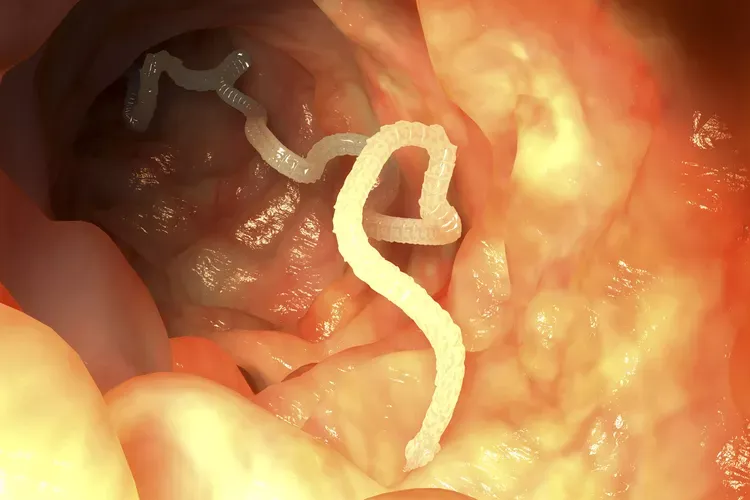
Black Spot Disease is a parasitic infestation caused by Turbellaria flatworms, typically Paravortex, that appear as tiny black spots on the fish.
Treatment involves gravel vacuuming, freshwater dips, and the use of formalin or Praziquantel, with the key being prompt intervention for better prognosis.
Prevention includes removing host fish from the main aquarium for several months and controlling substrate organic matter to break the life cycle of the worms.
Black spot disease is caused by a parasite that commonly infests tangs and other surgeonfishes. However, other fish species and mollusks (shellfish) can also contract it. Black spot disease is also referred to as tang disease or black ich, although ich is actually caused by a different type of parasite. As the name suggests, the primary symptom of the infestation is tiny raised black dots on your fish's body.
The black spots on the fish are tiny Turbellaria flatworms. Luckily, these parasites are much less dangerous and life-threatening, as well as easier to treat, compared to protozoan parasites such as Oodinium, Cryptocaryon (ich disease) and Brooklynella.12 Nonetheless, fish infested with Turbellaria should be treated, as the parasite is unsightly and damaging to your fish's overall health.
What Is Black Spot Disease?
Black spot, or tang disease, is a parasitic infestation caused by a species of Turbellaria flatworm, typically Paravortex. Like other parasites, these worms require a host as part of their lifecycle.
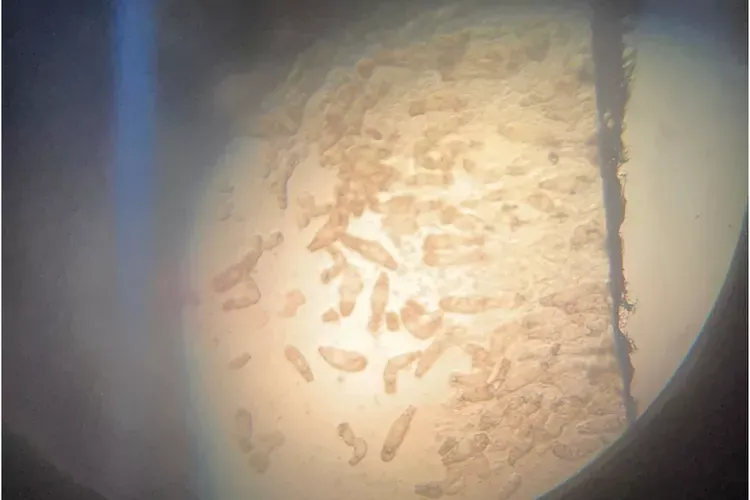
The reproducing cyst (similar to an egg) of the worm settles in the substrate of the aquarium. After hatching, the juvenile (200 micrometers long by 50 μm wide) Paravortex worms can swim freely, and they leave the substrate seeking out a host fish. Once they find a suitable host fish, the juvenile Paravortex burrow into the epithelium of the fish's skin or gills and begin feeding on the fish's cell fluids.3
After feeding on a host fish for about six days, the mature worm (now 2500 μm long and 750 μm wide) falls off the fish and descends into the substrate, where it forms a cyst.3
Approximately five days later, the encysted worm breaks open, releasing new young worms. These worms can swim immediately and attach to new hosts, continuing the cycle but with increased numbers.3
Symptoms of Black Spot in Fish
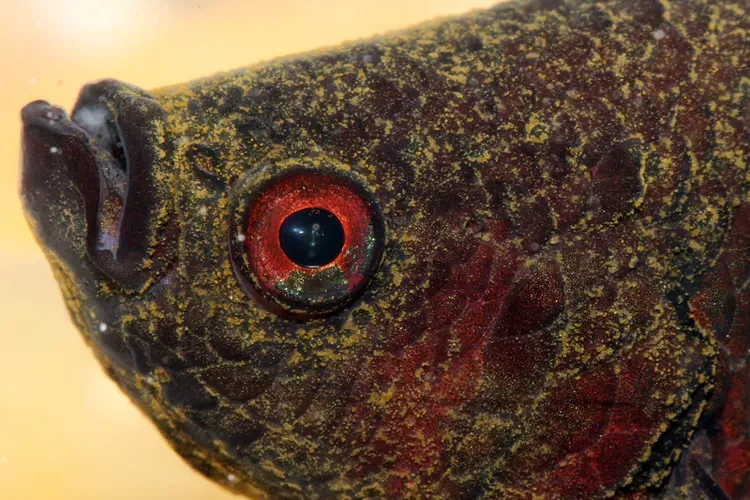
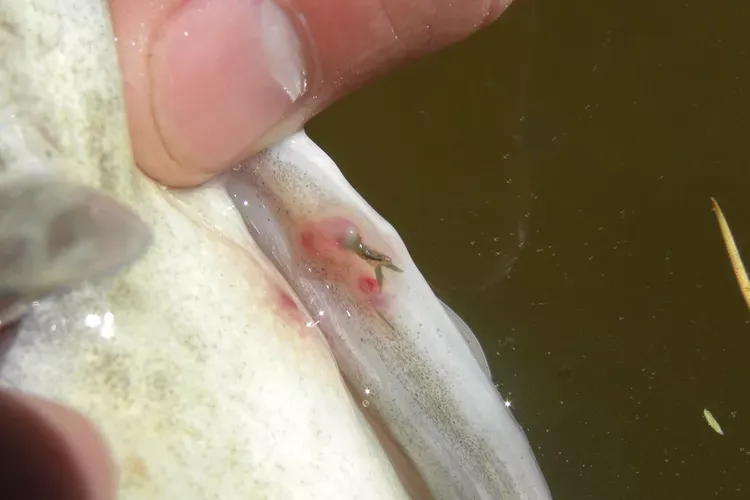
The distinctive black spots of this disease are around the size of a grain of salt. The spots can be anywhere on the fish's body.
Symptoms
Tiny black spots on the fish's body
Rubbing or scratching against substrate or tank decor
Lethargy
Faded color
Loss of appetite
Once these worms start feeding on a host fish they acquire melanin pigmentation, which causes the appearance of black spots about the size of a grain of salt in the skin and fin membranes. The worms have the ability to freely move about on fish as the spots do not always remain stationary. On light-colored fish, they are easy to see, whereas on dark-colored ones they may go unnoticed at first.
As with other surface parasites, the infested fish will scratch up against objects or the substrate in an attempt to dislodge the parasites. If the infestation is allowed to progress, the fish can become lethargic, lose its appetite, and fade in color. If the gills are affected, rapid respiration develops.4
Causes of Black Spot
Black spot, or tang disease, is caused by an infestation with a tiny parasitic worm, typically the Paravortex species of Tubullarian flatworms. Although not an extremely common problem in home fish tanks, the worm reproduces rapidly, and the infestation can quickly spread throughout a tank's inhabitants without prompt treatment.
Diagnosing Black Spot in Fish
You will generally be able to diagnose this condition by the distinctive small black spots, which are slightly raised. If you are uncertain, however, your aquatic veterinarian can diagnose the parasites by visual examination, or by scraping a bit of sample off your infected fish's skin, and then examining it under a microscope.
Treatment
Gravel vacuuming the aquarium may help reduce encysted worms in the substrate during an outbreak. Affected fish should be placed in a quarantine tank to prevent increasing the parasite population in the main aquarium. Give all infested fish a freshwater dip, followed by a formalin bath, following the manufacturer's instructions for mixing and using the product. Praziquantel is another treatment option that has been used with some success to treat affected fish in quarantine tanks.3
Prognosis for Fish With Black Spot
While it can take persistence to rid your tank of the flatworm, fortunately, most fish will recover from the infestation with prompt treatment.
How to Prevent Black Spot
Reinfection will occur no matter how effectively the fish have been treated if these parasitic Turbellarian worms are not eradicated from the main aquarium. The worms can survive for several months without a host. Here are some suggestions to help prevent reinfection.
Leaving the main aquarium devoid of all fish for several months is a cure that some aquarists recommend. However, this is not always possible or desirable. The theory here is that, without a host fish, the life cycle chain will be broken and the worm will not be able to reproduce, and thus, will eventually die off.
Young worms live in the substrate and feed on detritus and organic debris until they go in search of a fish host. Siphoning up the excess organic matter that builds up on the bottom of the aquarium can help to control their numbers.
For fish-only tanks, or marine aquariums containing no freshwater-sensitive invertebrates, hyposalinity (decreased salt concentration) can be applied.5 When using hyposalinity (osmotic shock), stirring the substrate occasionally will help to release the higher salinity water trapped in the gravel, exposing the flatworms to the lower salinity water in the aquarium.
How to Cure Ick on Freshwater Fish: Effective Treatment Solutions
If you suspect your pet is sick, call your vet immediately. For health-related questions, always consult your veterinarian, as they have examined your pet, know the pet's health history, and can make the best recommendations for your pet.






Leave a Reply
Your email address will not be published.