







Key Takeaways
Heartworms are internal parasites transmitted by mosquitoes that primarily affect dogs but can also infect other animals.
Heartworm disease can cause severe damage to a dog's heart, lungs, and blood vessels, potentially leading to death if untreated.
Preventative medication is crucial for dogs, as treatment for heartworm disease is lengthy, costly, and challenging.
Heartworms are a common occurrence in dogs and are a growing concern for cats. Like intestinal worms, heartworms are internal parasites that cause harm to dogs. But how do pets get heartworms and can people catch them?
Definition
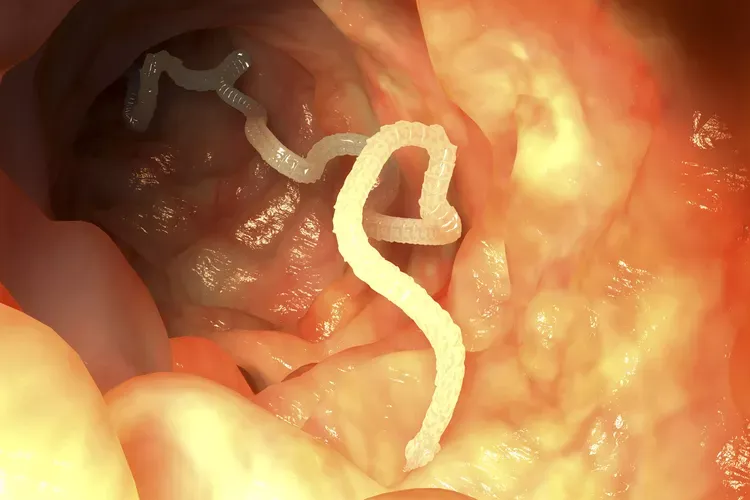
Heartworms are thin, white worms that live in the heart, lungs, and blood vessels of animals and are primarily associated with dogs.1 They can grow to be up to a foot long and hundreds of worms can grow inside an animal at one time. Adult worms look like spaghetti noodles but other life stages of the heartworm are microscopic. The scientific name for heartworms is Dirofilaria immitis.
Transmission
When a mosquito bites and sucks the blood of an infected animal it obtains tiny heartworm larvae called microfilaria. These baby worms then incubate inside the mosquito for 10 to 14 days and mature into infective stage larvae. The next time a mosquito that has these infective stage larvae bites another animal, that animal is then infected. After about six months these larvae grow into adult heartworms that produce baby worms for up to seven years in a dog if left untreated. This cycle can be repeated and a pet can be reinfected with each infected mosquito bite.1
Risks of Infection
Heartworms are concerning because they can interfere with the natural blood flow in a dog. Since adult heartworms can grow to be up to a foot long, these worms can clog the blood vessels and damage the heart and lungs.2
In dogs, hundreds of heartworms can be present all at one time.3 This is because as heartworms grow and mature, they also reproduce inside a dog and make more little heartworms that spread throughout the circulatory system, lungs, and heart. These worms cause trauma to these systems which can shorten the lifespan of a dog and even cause it to die since blood is unable to properly circulate in the body.3 Symptoms of heartworm disease include respiratory issues, exercise intolerance, blue discoloration of the skin and gums, spitting up blood, fainting, nose bleeds, and the accumulation of fluid in the abdomen.2
Treatment and Prevention
Dogs thankfully do have a treatment option if they are infected with heartworms. Dogs that test positive for heartworm disease are usually recommended to have their activity restricted and receive medication to kill the heartworms, but it is usually a lengthy, and costly, process.43 The typical protocol includes monitoring and treating symptoms along with receiving special injections in the back muscles to kill the parasites.
Prevention of heartworm disease is important for dogs. Mosquitoes can pass heartworms into dogs that go outside to use the bathroom where these insects proliferate in most parts of the country. Regular heartworm preventative medication is both safe and effective in preventing infection from these parasites.2
Heartworms in Humans
If mosquitoes transmit heartworms through bites and mosquitoes bite people too, can people get heartworms? It is a valid question and technically the answer is yes. In addition to dogs, cats, wolves, coyotes, jackals, foxes, ferrets, bears, seals, sea lions, and even people have been recorded contracting heartworms.56 However, just because a heartworm can infect a person doesn't mean the worms reproduce and cause a problem in humans like they do in animals.
In the rare occasion that a human is infected with heartworms, the parasite will die off since it is unable to survive in a human body.7 The dead parasite may cause the body to react with inflammation, so typically the only sign of a heartworm infection in a person is a nodule that shows up on an X-ray in the lungs of a person. This nodule looks similar to lung cancer but is just the tissue reaction from the heartworm.
If you suspect your pet is sick, call your vet immediately. For health-related questions, always consult your veterinarian, as they have examined your pet, know the pet's health history, and can make the best recommendations for your pet.






Leave a Reply
Your email address will not be published.