





Key Takeaways
Saltwater ich, caused by Cryptocaryon irritans, presents as white spots on fish and can cause respiratory distress and lethargy.
Treat infected fish in a bare quarantine tank with copper or formalin, and leave the main aquarium fish-free for 4 weeks.
Prevent reinfection by cleaning equipment, performing water changes, and ensuring the main tank is parasite-free before reintroducing fish.
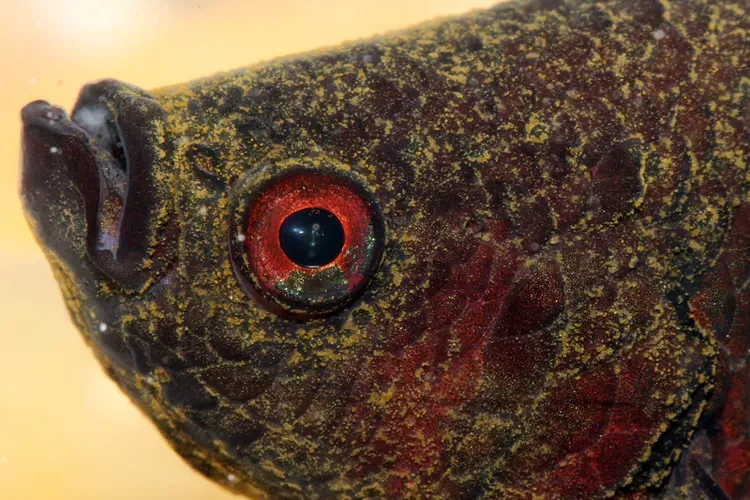
If your aquarium fish have developed white spots, around 0.5 to 1.0 millimeters in size, on their fins and skin, they could be suffering from saltwater ich, also known as white spot disease. Caused by parasitic protozoa, Cryptocaryon irritans, saltwater ich can cause respiratory distress, lethargy, and rapid breathing in your fish. But if detected early and treated promptly upon an outbreak, the chances of recovery are high.
Read on to learn about saltwater ich, plus how to detect and eradicate it in your aquarium.
Symptoms
Unlike the notorious "clownfish disease," which typically attack the gills first, saltwater ichusually appears at the onset as salt-sized white spots visible on the body and fins of a host fish, although it can also infest the gills. Because Cryptocaryon is more easily recognized in its beginning stage, it is much easier to treat and cure before it gets out of control.
Aside from the appearance of the white spots, fish will scratch against objects in an attempt to dislodge the parasites, and rapid respiration develops as trophonts, mucus, and inflamed tissue clog the gills. Fish become listless, refuse to eat, loss of color occurs in patches or blotches.
Treatment Recommendations
Copper is very effective and works well to eliminate saltwater ich in its free-swimming stage. Rather than treating them in the main aquarium, move the sick fish to a bare-bottomed quarantine or treatment tank. This should be aerated and have the same water conditions as the main aquarium.
Because of the prolonged life cycle of saltwater ich, affected aquariums should be treated for a minimum of 3–6 weeks. If the fish are removed from the saltwater aquarium into a quarantine tank, any Cryptocaryon parasites remaining in the aquarium without fish will die after a period of time, up to 4 weeks, depending on temperature.
Warning
Copper is toxic to marine invertebrates, so if they are present in the aquarium, the fish should be moved to a quarantine tank for treatment.
A combination of freshwater and formalin treatments should work for your fish in the quarantine tank. Here are some medication tips for your fish:
Porous materials such as sand, gravel, rocks, and ornaments can absorb medications. To better control the strength and effectiveness of any product you are using, it is best to use a bare QT with only some cut pieces of PVC tubing in the tank to provide shelter for the fish during the treatment period.
Although many over-the-counter remedies contain the general name Ich or Ick, carefully read the product information to be sure it is designed to specifically target and treat "Cryptocaryon."
Preventing Re-Infestation
Reinfection will occur no matter how effectively the fish have been treated if Cryptocaryon is not eradicated from the main aquarium, which can be accomplished by keeping the tank devoid of any fish for at least 4 weeks. For fish-only aquariums, hyposalinity can be applied, and to speed up the life cycle of the organisms, elevate the tank water temperature.
Several days prior to returning fish to the main aquarium, clean all filtering equipment, change any filtering materials, and perform a water change.






Leave a Reply
Your email address will not be published.