


Bizzare as it might sound, your pet's poo is often one of the best indicators for your pet's health as it gives you an insight into how your pet's inner systems are working. Any changes in colour, consistency, smell or size can signify that something in your pet isn't working as it should.
In this guide we walk you through the the different colours and textures of dog poo you might encounter and what they may mean and whether introducing a dog digestion aid might be able to help.
Key Takeaways:
Your dog's poo can tell you a lot about their internal health.
A healthy dog poo should be brown, well-formed, and leave little to no mark behind when picked up.
If you notice anything unusual in your dog's poo colour or texture, it could be a sign that something is wrong. Be sure to monitor for any other symptoms or call your vet if you're concerned.
Contents:
Dog Poo Colour Chart
Dog Poo Texture Guide
Diarrhoea in Dogs
Constipation in Dogs
Dog Poo Colour Guide
The colour and consistency of your dog’s stools offer a vital window into their well-being. And as you have to bag what they drop, you’re in an ideal position to take a daily check, and everything is as it should be. Add “check it” to your “bag it and bin it” routine to ensure your dog's health is in tip-top condition.
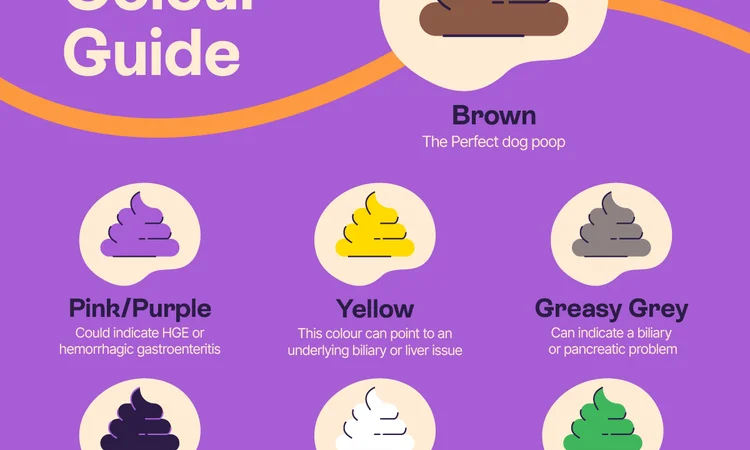
Normal Brown Dog Poo
A healthy dog poo should be ‘milk chocolate’ brown, which is rather unfortunate for fans of Dairy Milk, but that’s what you’re looking for. Maybe you should carry a bar every time you walk the dog? Just as a colour reference, you understand!
Black Dog Poo
If your dog's poo is black or very dark, this can be a sign of an ulcer or a bleed in the upper gastrointestinal tract. The blood is not fresh, which turns the stool black, much like with a bruise or a fingernail that’s been squashed.
Blood in Dog Poo
This likely means there is blood in the dog poo, which can be an indicator of colitis (inflammation of the colon), an anal gland infection, a rectal injury or worse. The red means the blood in the poo is fresher, which could be something as simple as an abrasion in the anus but it may also be a sign of something worse, and you should consult your vet immediately if you find blood in your dog's poo.
Pink/ Purple Dog Poo Meaning
If the dog poo looks like raspberry jam, bag a sample and take your dog to the vet as soon as possible. While unlikely, this is often a symptom of haemorrhagic gastroenteritis (HGE), a serious condition that can drastically impact your dog's health. HGE is much easier to treat when it's caught early, so make sure to consult your vet immediately if you are ever concerned about the colour of your dog's poo.
Grey Dog Poo Meaning
If your dog's poo is fatty or slimy soft, this shows a failure to break down fats. Your dog’s system could have been overloaded if they’ve eaten too much fat (when they raided a bin or stole something they shouldn’t have), or it could be a wider problem with the pancreas or bile levels. If it persists, talk to your vet.
White Specks in Dog Poo
White specks in dog poo are a clear sign your dog has a worm infestation, as the white specks (often compared to grains of rice) are commonly segments of a tapeworm that have broken off in their stool. Consult your vet on the best dog worming treatments and treat your dog routinely with an effective, broad-spectrum dog wormer.
If you're not sure what wormer would work for your dog, then check out our blog on the best worming treatments for dogs.
Orange Dog Poo
This could be a sign that your dog's food is being processed too fast for the bile in your dog's gastrointestinal tract to make it appear normal. If the food doesn’t spend enough time in the gastrointestinal tract, where the bile operates, it can’t make it brown. This may be a temporary insufficiency or a sign of larger liver or biliary issues.
Yellow Dog Poo
Yellowish colour is a sign of mucus in dog poo which is a classic sign of a dog food intolerance. Before you panic, think about if you've changed your dog's diet lately or if there's a chance they've been scavenging or begging for food they shouldn't have. If neither is the case, speak with your vet for further advice.
Green Dog Poo
Green dog poo may be a sign your dog has eaten too much grass, but it can also indicate parasites, poisons or even gall bladder issues. Keep an eye on it, and if it persists, consult your vet for further advice.
Dog Poo Texture Guide
Even if your dog’s poo is a normal colour, other aspects need to be taken into account, such as the poos texture. Many owners don’t think much about the shape and feel of their dog’s poo when picking it up, but this can also be a clear indicator or if there are any problems.
What Should Your Dog’s Poo Feel like?
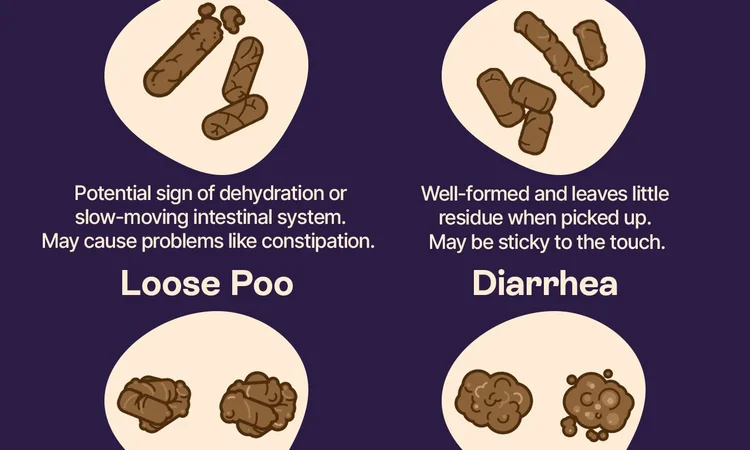
Many vets follow a scoring chart when it comes to discussing your dog’s stools, and while each of these differ in terms of how many “Grades” of stool are included, they follow the same kind of spectrum from very solid to watery. Our dog poo texture chart below lists each variation of the texture of your dog's poo.
What does healthy dog poo look like?
Following our chart above, a healthy dog poo should range between a 3 and a 4, meaning it’s well-formed and leaves little to no mark when it’s picked up. It may be a little sticky to the the touch, but this is okay.
If your dog’s poo is a grade 5 or 6, this also isn’t too alarming, although you should keep an eye on their poo for the next few days to make sure it doesn’t escalate to a further grade which could be a sign of a problem. If your dog is having loose stools, it can sometimes be a sign of unbalance microflora in their gut, which can sometimes be sorted by introducing probiotics like Purina Pro Plan FortiFlora to your dog’s diet.
Diarrhoea in dogs
If your dog is having stools from 7 upwards and the introduction of a dog probiotic doesn’t sort them out, it could be a sign your dog is having problems with their digestive tract, such as a dog food intolerance or something more serious. If your dog has diarrhoea, you need to get them to a vet as soon as possible. If left too long, diarrhoea in dogs can lead to dehydration or worse, so it’s crucial the matter is seen as soon as possible.
Constipation in dogs
If your dog’s poo is a 1 or 2, this doesn’t necessarily mean there’s something wrong, but it may be a sign of dehydration or a slow-moving intestinal system. This can be very uncomfortable for your dog if it continues as they strain more to pass their stools, which may even lead to constipation, which can cause further problems.
Many things may cause constipation in dogs, such as stress, whether they’re taking any medication or something more serious, such as a blockage. If your dog is constipated, get it to a vet as soon as possible so they can diagnose and treat the root cause and help it feel more comfortable again.
Your dog’s poo is a great indicator of their internal health and can highlight a number of issues both in their body and with their diet. If you’re concerned about either of these things, consult your vet as soon as possible.





Leave a Reply
Your email address will not be published.