


Did you know that February is the official Pet Dental Health Month? We've put together this guide to help you understand the importance of caring for your dog's teeth as well as highlighting the key signs of dog gum disease and what you can do to prevent it.
Dental Disease in Dogs | How to Brush Dog Teeth | Alternative To Brushing Dogs Teeth
How Often Should You Brush Your Dog's Teeth?
The optimum number of times to brush your dog’s teeth is twice a day, and once they are used to the routine, they may even start to enjoy it!
This may, however, be a bit of a struggle if your dog is not used to having their teeth brushed or if they don’t like it. In this case, you should brush your dog’s teeth at least three times a week to reduce any plaque buildup without causing too much unnecessary stress to your dog.
How Many Teeth Does a Dog have?
Puppies have 28 milk teeth from approximately 8-10 weeks old. As they continue growing and maturing, these baby teeth are slowly replaced by their adult teeth, much like with humans. Adult dogs have 42 permanent teeth, which fall into the following categories:
12 Incisors (6 on top and bottom) — These are at the front of your dog's mouth. They are used to tear meat from bone or to groom themselves.
4 Canines (2 on top and bottom) — These are the sharp, fang-like teeth beside your dog’s incisors. They are made for puncturing and holding onto things, like when playing tug-of-war.
16 premolars (8 on top and bottom) — These are used for shearing and chewing.
Ten molars (four on top, six on bottom)—These teeth are the furthest back in your dog's mouth. They are used for grinding and chewing to break down food.
Dental Disease in Dogs
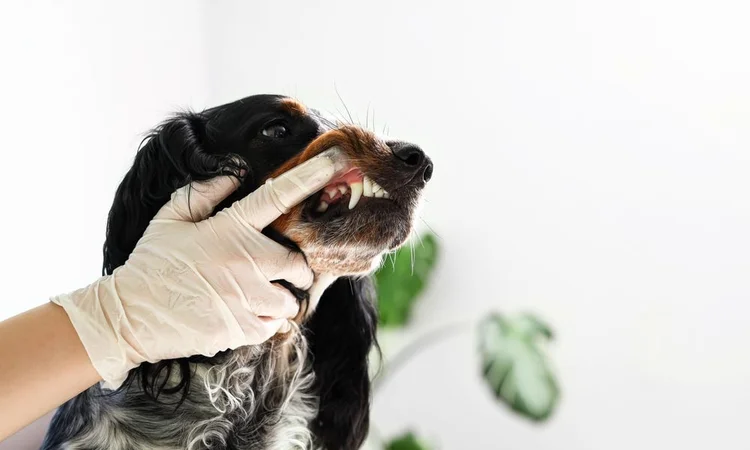
Dental disease refers to a number of conditions that can affect your dog’s mouth, teeth, and gums throughout their lifetime. If your dog’s teeth are not adequately cared for, the remnants of food and bacteria along their gums can become plaque. The plaque then hardens into what’s known as tartar, much like human teeth.
A build-up of tartar can cause a number of problems, including inflammation and irritation of your dog’s gums (referred to as gingivitis in dogs), which can then develop into gum disease. If left untreated, gum disease in dogs can make it hard for your dog to eat or chew their food and, in extreme cases, may require your dog to have teeth extracted.
Signs of Gum Disease in Dogs
Signs of Gum Disease in Dogs There are multiple stages of gum disease in dogs, starting with the less damaging and more treatable stages before developing until the only option is extraction. Some of the key signs of gum disease in dogs include:
Bad breath (halitosis)
Redness in gums (gingivitis)
Loss of appetite due to pain when chewing.
Drooling.
Swelling in the face and refusing to allow you to lift their lips or touch their face.
Changes in behaviour, such as unwillingness to play with chew toys.
By knowing the first signs of dental disease, you can get your dog treated at a vet before any irreversible damage is done. However, many of the signs your dog suffers from gum disease are hard to notice, and symptoms may not be noticeable until it’s too late. This is why regularly caring for your dog’s teeth is the best way to help prevent dental disease.
How to Brush Your Dog's Teeth
A crucial part of any dog dental care plan is very much like a humans, which means employing the use of an appropriate dog toothbrush and toothpaste. Obviously, teaching a dog how to brush their own teeth isn’t an option, so this is where you come in.
Getting Started
Most dogs won’t take kindly to you shoving a toothbrush into their mouth, so a gradual introduction is always the best way forward.
Get your dog used to having their mouth handled — lift their lips and, if they don’t pull away, run your finger along their teeth and gums.
If this goes well, be sure to offer your dog a treat so they know if they allow their teeth to be touched, they’ll be rewarded.
Start with your dog's front teeth and gradually work up to touching their back teeth over a few days (or more, if necessary).
Go at your dog’s pace. If they don’t like being handled for too long, don’t force them to sit still. This can cause your dog to become stressed and make working up to brushing much harder.
Finally, introduce your dog to the toothpaste of your choice. Make sure you choose a pet-specific toothpaste and never use human toothpaste on your dog as these tend to contain Xylitol which is toxic to dogs. Many dog toothpaste is flavoured to make them more palatable for dogs, so they take to them much quicker.
Once your dog is comfortable with the taste of the toothpaste and is happy to have their mouth and teeth handled, it’s time to get down to business.
Introduce a Dog Toothbrush
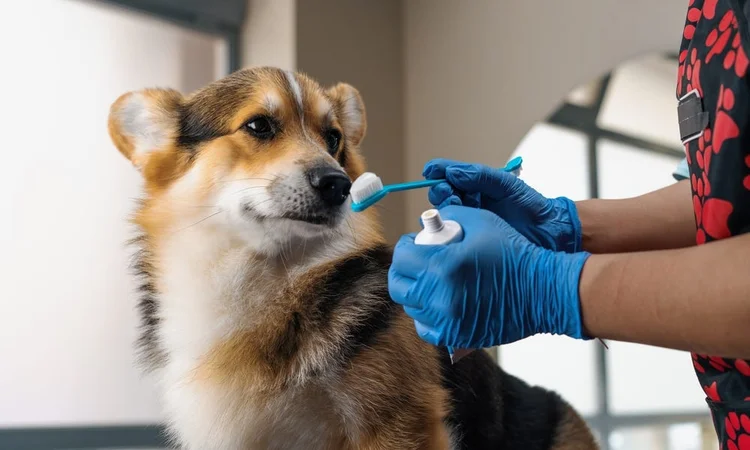
The next thing you need is a dog-appropriate toothbrush. Unlike human toothbrushes, dog toothbrushes are specifically designed to fit your dog’s mouth, with a longer handle for those with long muzzles and shorter options available for flat-faced breeds. The bristles on these toothbrushes are also softer than human toothbrushes and are slightly angled to allow for easy use with your dog’s teeth.
Apply a small amount of toothpaste to your dog’s toothbrush (many brands have a recommended amount suggested on the packaging).
Have your dog sit (make sure they are calm and relaxed to make things easier on both you and your dog) and gently lift their lip and approach with the toothbrush, keeping the bristles at a 45 degrees against their teeth to help brush the plaque away from the gumline.
Gently start brushing your dog’s teeth in a small circular motion, working top to bottom on both sides. Start with only a few teeth, such as the incisors and canines. If your dog is happy to let you, you can start working further back into their mouth.
If your dog is reluctant, try and focus more on the outside of your dog’s back teeth, as this is where plaque tends to build up most.
Make sure to praise your dog for a job well done!
Don’t panic if you notice some slight bleeding when your first start brushing your dog’s teeth. This is perfectly normal. However, if the bleeding is continuous, then it may be a sign you’re brushing too hard or one of the early signs of canine gum disease. If this is the case, consult your vet for further advice and treatment options.
Alternatives to Brushing Your Dog's Teeth
All dogs are different, and in some cases, a dog will not like their teeth brushed to the extent that doing so routinely is impossible. But that doesn’t mean you have to resign yourself to the hefty vet bills that come with dog dental treatments. There are a number of alternatives to brushing your dog’s teeth, including:
Dog dental chews or dental sticks, like the Veggie Dent Chews from Virbac. These tasty treats are designed to be palatable for your dog and their specifically shaped design works to scrape plaque from your dog’s teeth to produce tartar and bad breath.
Dog dental treats like these ProDen PlaqueOff Dog Dental Bites also work to reduce plaque and tartar buildup in dogs in the form of an easy-to-give bitesize treat.
Dog dental supplements are another great way to help care for your dog’s teeth without the need for brushing. These dog supplements are available in a variety of forms, like this PlaqueOff Powder for dogs or the Vet Aquadent water additive that makes caring for your dog’s teeth easy and stress-free!
When it comes to caring for your dog’s teeth, doing something is always better than doing nothing, so no matter what kind of dog dental care product you choose, so long as it’s used routinely, you can rest assured your pup’s teeth are being taken care of. If you’d like to learn more about the dental options available for your dog, get in touch with us or check out our great range of dog dental care products today.






Leave a Reply
Your email address will not be published.