







Heart disease is present in around 15% of dogs in the UK. This can progress to heart failure, often called “congestive heart failure” or CHF. Dogs don't have sudden, unexpected heart attacks as humans do. Instead, heart failure in dogs is a progressive disease which, without veterinary intervention, will slowly worsen.
In this guide, we explore the key signs of heart failure in dogs, how the condition is diagnosed, and the available treatment options.
What is Congestive Heart Failure in Dogs?
The heart is a muscular pump with four chambers that pumps blood to the lungs to pick up oxygen, then around the rest of the body to deliver that oxygen and pick up waste products.
The heart can compensate for mild levels of disease for a while, but heart failure will follow when the heart can no longer compensate, and the pump is no longer effective in sending enough blood around the body.
There are a variety of medicines that can be used to support the heart and keep dogs with heart disease comfortable for sometimes quite long periods of time.
What Causes Heart Failure in Dogs?
The underlying causes of heart failure can be broadly divided into acquired disease and congenital disease:
Acquired Disease
Acquired disease is a disease that has developed over the course of the animal’s life, often due to general wear and tear, but sometimes as a result of other problems such as infection.
Acquired heart disease can be common in older dogs as their bodies begin to slow down and their heart might not be working properly like when they were youngsters.
Acquired heart disease includes:
Valvular Disease
There are four valves in the heart, dividing the heart chambers from each other and from the blood vessels entering and leaving the heart. They can become hard and thickened with age or infection, and as a result, don’t close properly.
Blood can then leak through the valves, causing turbulent blood flow and reducing the amount of blood pumped around the body.
Breed predisposed to valvular disease: typically smaller breeds, including Cavalier King Charles Spaniels, Whippets, Miniature Schnauzers, Maltese terriers and Pekinese.
Myocardial Disease
The myocardium is the heart muscle, and if it becomes weakened, the heart's pumping becomes ineffective and starts to fail.
The most common cause of this in dogs is Dilated Cardiomyopathy (DCM), in which the heart muscle becomes thin, the chambers dilate, and the heart cannot relax or contract properly. DCM may also be set off by viral infection or a nutritional deficiency.
Breed predisposed to Myocardial Disease: usually larger breeds such as Dobermans, Great Danes, St Bernards, Bernese Mountain dogs and Irish Wolfhounds. It is more common in males, and there is probably an inherited component.
Pericardial Disease
The pericardium is a protective sac around the heart. It can harden or fill with fluid, restricting the heart's expansion and contraction and leading to heart failure.
Breeds predisposed to pericardial Disease: Golden Retrievers, German Shepherds, Labrador Retrievers, Rottweilers, Bulldogs, French Bulldogs, and Boston Terriers.
Arrythmias
An arrhythmia is a disturbance in the electrical conduction of the heart that causes an abnormal heartbeat. This can be too fast so that the heart doesn’t have time to fill before contracting again, or too slow so that not enough blood is circulating in the body.
Breeds predisposed to arrhythmias: Cavalier King Charles Spaniels, Boxers, Dobermans and Irish Wolfhounds.
Congenital Disease
Congenital disease is a disease that an animal is born with. With congenital heart disease, these are usually anatomical defects and can be detected by a heart murmur.
Congenital heart defects include:
Patent Ductus Arteriosis (PDA)
A blood vessel which bypasses the lungs in an embryo. It should close at birth but can remain open, leading to heart disease.
Pulmonary or Aortic Stenosis (PS/AS)
A narrowing of either the Pulmonary Artery (main vessel to the lungs) or the Aorta (main artery to the rest of the body) causes resistance to smooth blood flow.
Ventricular or Atrial Septal Defects (VSD/ASD)
The muscle wall between the two sides of the heart fails to close properly, leading to a hole in the heart and mixing of blood from both sides, resulting in turbulent blood flow.

Symptoms of Heart Failure in Dogs
Symptoms are mainly related to fluid building up in various areas of the body due to the heart pumping less efficiently. Signs of heart failure include:
Lethargy
Weight loss
Inappetence
Exercise intolerance
Coughing (caused by fluid in the lungs)
Wheezing or short of breath
Pale Gums
Swollen Abdomen (also called ascities caused by fluid retention)
If you notice any of these signs, have your pet examined by the vet as soon as possible.
How is Heart Disease in Dogs Diagnosed?
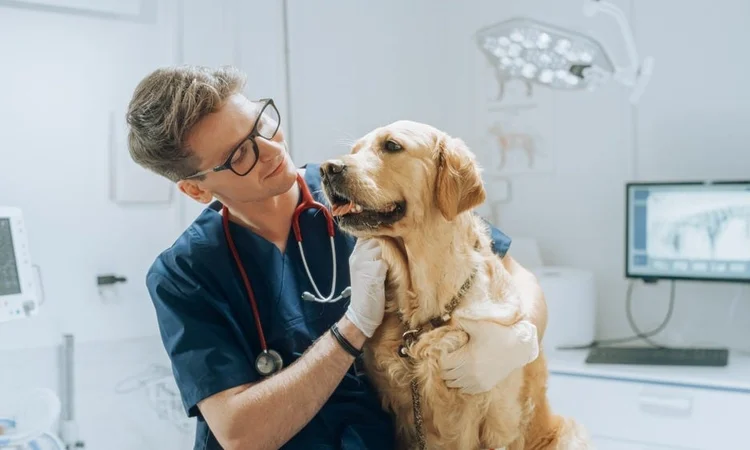
If your dog is showing early signs of heart failure, they must be examined as a vet for a professinal diagnosis.
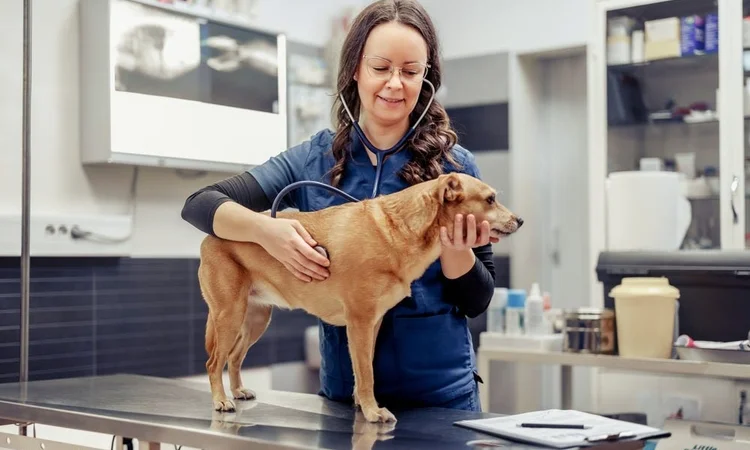
A history of the above signs will raise the vet’s suspicion of heart disease, and they may also detect signs such as weak pulses, an enlarged liver, or crackles in the lungs, which would all point towards heart failure.
A heart murmur is also often heard. This is an abnormal “swoosh” sound that is heard between or during normal heart sounds and is caused by turbulent blood flow.
Futher diagnostic tests may also be required, such as:
Imaging of the heart and lungs (chest x-rays or heart ultrasound.
An electrocardiogram (ECG) to show the electrical conduction of the heart.
Blood screening to check kidney function
Treatment for Heart Failure in Dogs
There are a few options for heart failure treatment in dogs, including medicinal treatments, changes to lifestyle such as diet and exercise, as well as surgical options.
What treatment is right for your dog will be decided at the discretion of your vet depending on the type of heart disease your dog suffers from.
Medicinal treatments for Canine Heart Failure
Below, we explore some of the medications your dog may be prescribed to treat heart failure.
Angiotensin Converting Enzyme Inhibitors (ACEI)
ACE Inhibitors are drugs that reduce pressure on the heart by encouraging the blood vessels to remain dilated and open to increase and improve blood flow .
These are commonly used in the treatment of heart disease and can be given alone or in combination with other drugs.
Diuretics
Diuretics are drugs which rid the body of fluids from places where there shouldn’t be fluid, such as the lungs and abdomen, as described above.
The fluid is absorbed into the bloodstream, and then the drugs act on the kidneys, which produce more urine to excrete the fluid.
There are different diuretics which act on different parts of the kidney. These drugs can be used separately or together, and your vet may want to monitor kidney function when using these drugs.
Inotropes
An inotrope is a drug that causes the heart muscle to pump more forcefully, and they are often combined with agents that slow the heart rate, giving it more time to fill fully with blood.
There are other drugs that may be used depending on the specific heart disease that your pet is suffering from, such as drugs to control blood pressure or abnormal heart rhythms.
Other Treatment Options
While medication is also certainly going to be needed to treat your dog's condition, there are other options that may be recommended by your vet depending on your dog's case.
These can include:
Diet & Exercise
Animals with heart disease are often exercise-intolerant, but it is important not to let these animals become overweight, as this can worsen the heart disease.
There are prescription dog food diets specially formulated for animals with heart disease. These diets include:
Royal Canin Veterinary Cardiac Dog Food
Dechra SPECIFIC CKD Heart & Kidney Support Dog Food
Calibra Veterinary Diets Renal & Cardiac Dog Food
These diets are low in salt so as not to raise blood pressure, which can further damage the heart.
Surgery
In a small number of cases, there may be a surgical solution to the heart disease, but this is only rarely done and is incredibly specialist surgery.
Cases where this may be indicated are in some of the congenital defects that can be fixed surgically, implanting a pacemaker in dogs with dangerously slow heartbeats or in cases of pericardial disease, and the protective sac around the heart can be removed if needed.
As heart disease in dogs is usually progressive, regular check-ups are needed with a veterinary surgeon as treatment plans will alter in response to changes in your dog’s condition.
The prognosis for a dog with heart failure can vary drastically depending on the severity of the disease and the dog's response to treatment. Other health conditions and your dog's age can also factor in to their prognosis, which you should discuss further with your vet.






Leave a Reply
Your email address will not be published.