

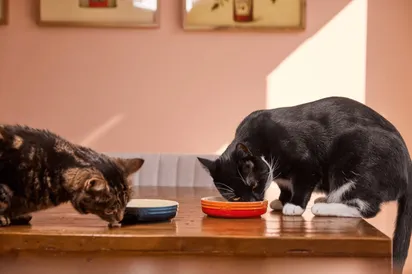








There are benefits and drawbacks of both wet and dry foods, but what about a mix of the two?
Mixed feeding can offer your pet the best of both worlds, makingnit a great diet choice for many pets. However, understanding how best to mix wet and dry foods effectively and without the risk of overfeeding can be more challenging.
In this guide, we look at how to effectively mix-feed your pet so they can enjoy the benefits of both wet and dry foods.
Why Mix Wet & Dry Foods
Mixed feeding your pet's food offers them the benefits of wet food (high moisture content, palatability, and satiety) with the benefits of dry food (convenience, cost, and versatility) to provide a complete diet with the best of both worlds.
There are a number of advantages to mixed feeding, such as:
More variety in meals (flavour, texture, etc.)
More appealing to fussy eaters (wet food is more enticing than dry kibble to some pets)
Added moisture content (ideal for pets who don't drink enough)
Opportunity for enrichment (using wet food on a LickiMat® or kibble in a treat dispenser)
Whether a combination diet is suitable for your pet depends on their needs and eating habits. If you're unsure if mixed feeding is best for your pet, speak with your vet for advice.
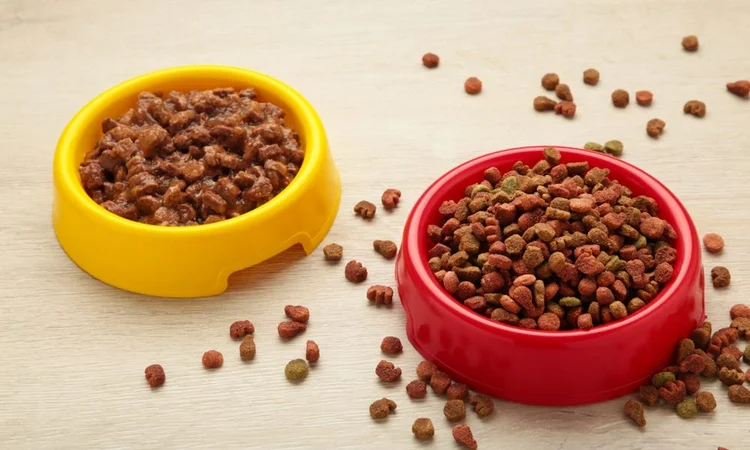
How to Mix Wet and Dry Pet Foods
While mixing wet and dry dog food or wet and dry cat food might sound simple, it’s not as easy as it seems.
Both wet and dry pet foods are formulated as complete meals, which means they have all the necessary nutrients, vitamins and minerals your pet needs per meal in each serving. To successfully mix wet and dry foods, you need to strike the right balance to ensure your pet is getting all the nutrients they need to thrive without overfeeding.
You can mix feed in one of two ways:
Mixing wet and dry food in the same bowl (makes kibble more enticing, adds moisture to the meal, variety in texture)
Serving wet and dry food in separate bowls (prevents wet food waste, great for grazers, variety in flavours)
The way you choose to serve your pet a combination diet will depend on what you hope to acheive through mixed feeding. If your pet prefers smaller meals, mixing wet and dry food might cause more waste since wet food spoils faster and attracts flies, but if you're trying to entice a pet to eat their kibble, then serving wet food separately likely wont help. It all comes down to your pet and what's best for them.
Regardless of why or how you mix feed, the key is balance. Here are our top tips for mixing wet and dry food:
Stick to the Same Brand
Plenty of brands on the pet food market offer both wet and dry versions of their food, which is great for mixed feeding, because the calculations for how much wet vs dry food have already been done for you.
On the back of all pet food packaging are feeding guidelines that outline how much food is needed for your pet based on their weight. Brands with wet and dry formulas tend to display mixed-feeding guidelines on the back of their food, such as:

[Feeding guidelines from Hill's™ SCIENCE PLAN™ Sensitive Stomach & Skin Dry Dog Food]
These mixed feeding guidelines save you the time of calculating how much of each food you need to give, ensuring your pet’s diet remains balanced and complete.
Count the Calories
Mixed feeding can become tricky when you mix brands because you’ll need to do the calculations for how much wet and dry to feed your pet yourself.
To do this, you'll need to know the following:
Your pet’s daily calorie allowance (how many calories they need every day)
Calories in one serving of wet food (kcal per pouch/tin/can)
Calories in one serving of dry food (kcal per serving size)
Once you know how many calories in the foods and how much your pet needs, you can decide how best to distribute the wet and dry foods to meet your pet's needs without overfeeding.
If you’re ever unsure of how much your pet should be eating, then speak with your vet. They can advise on how many calories your pet needs and whether they need more or less depending on their body condition.
Don't Mix Lifestages
All pet foods have been meticulously formulated to contain all the necessary nutrients pets need depending on their life stage.
A pet’s nutritional needs shift and change as they age. Puppies and kittens need higher levels of protein and fats to aid growth and development, whereas adult and senior pets will require less in order to maintain a good body condition.
If you are planning to mix feed for your pet, make sure you are not mixing lifestages, as this could unbalance your pet’s diet and potentially lead to nutritional deficiencies or excess.
Follow Your Vet's Guidance
There are some instances where pets require dietary adjustments to support their health, such as switching to a condition-specific pet food to support a health condition.
In this instance, a mixed feeding diet may not be suitable as not all veterinary foods are available in wet and dry formulas.
If your vet has recommended a veterinary pet food diet, you should always follow their advice and guidance in the interest of your pet’s overall health.
Mixed feeding offers a range of benefits for your pet, but only when it’s done right. If you’re not sure how to best mix-feed your pet , then speak with your vet for guidance.






Leave a Reply
Your email address will not be published.