
Feline communication is a complex system of sign language, some vocalization, and even scent cues people can’t detect. Signals help define and reinforce the cat’s social position and smooth cat-to-cat, cat-to-people, and cat-to-dog relationships.
Silent communication can be as subtle as a gently flicked tail. Misreading a cat’s clear signal may prompt a hissy fit or worse — injury to you, or your other pets.
Cat Tail Positions
Friendly cat tails seek to decrease the distance between individuals. The high-held tail pointed straight up is the feline equivalent of a “howdy!” and means Kitty welcomes attention and interaction. However, dog tails held straight up with little movement mean the opposite — and in dog-cat households in which pets don’t speak the same language, a spat may ensue.
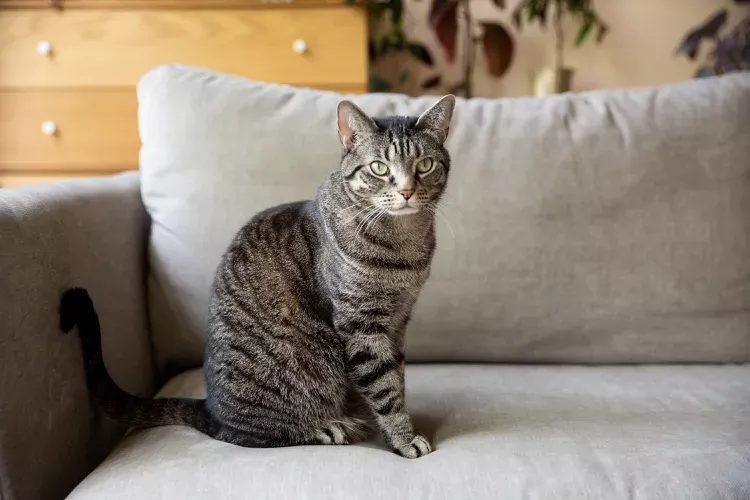
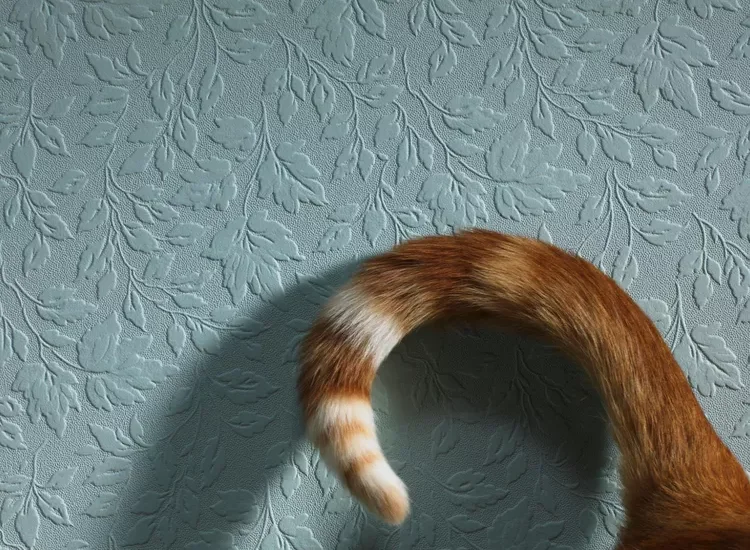
A relaxed cat's tail curves down and back up in a gentle U. The more interest he feels, the higher the tail. Confident cats also hold their tails high, and when the end barely tips over like a finger waving “hi there,” it means he’s interested in interaction.
Wagging Cat Tails
Other cat tail signals warn you away with signs to increase the distance between individuals. A wagging tail tells you to “back off!” And when Kitty starts thumping the ground with her tail, she’s ready to attack. A moving tail in cats generally indicates arousal of some sort — excitement, fear, aggression — but your dog may mistake the tail-wagging cat as an invitation to approach. After all, doggy wags often mean, “come close, let’s be friends.”
The end of the tail flicking back and forth usually indicates frustration or heightened emotion. Tabby may do this when the bumbling puppy won’t back off. If this tail warning to back off is ignored, the tail escalates to lashing or thumping — and ultimately an attack.
Bristled Cat Tails
Watch Kitty’s fur level, too. Fur standing straight off the body (piloerection) indicates great arousal. A bristled tail held upright or straight behind the cat indicates aggression — watch out! But the bottlebrush tail held in an inverted U shows fear or defensiveness, and if push comes to shove, the cat will shove back with all claws bared.
Tucking the tail between the legs signals ultimate fear. That doesn’t mean Kitty won’t resort to using claws and teeth, though, if she’s cornered. You’ll usually also hear lots of hissing, growling, and other vocalizations, and the terrified cat may crouch low to the floor with ears slicked back. Or she may turn onto her back — not in submission, but to get all four claw-filled paws ready for defense. Once again, this can confuse dogs (and owners), who misinterpret rolling over as a sign of submission. Cats don’t do submission.
Cat Communication Matters
It’s important that cat owners recognize feline “tail talk” because many behavior problems are a result from miscommunication.1 Cats tell us how they feel and what they want, and they must think humans are incredibly dense not to understand.
If you are an equal opportunity pet lover who shares your home with both dogs and cats, you may need to act as an interpreter. It can take a while for dogs to understand what Kitty tells them (and vice versa). Becoming multilingual solves or prevents a host of potential pet problems.
10 Fascinating Bobtail Cat Breeds You Need to Know
If you suspect your pet is sick, call your vet immediately. For health-related questions, always consult your veterinarian, as they have examined your pet, know the pet's health history, and can make the best recommendations for your pet.




Leave a Reply
Your email address will not be published.