
No matter how well you care for your cat, there will inevitably come a time in their life when you’ll need to give them a tablet. This could be to treat an existing condition or even just to give them a routine deworming tablet for cats.
Cats, however, aren’t typically fans of taking tablets, so we’re here to talk you through the best way to give cats pills without too much stress or fuss.
How to Give A Cat A Tablet
If you’re not looking to trick your cat into taking their medicine, there’s a simple way to give them a tablet.
First, check the medicine’s datasheet thoroughly for instructions on how the tablet should be given. Sometimes, the tablet can be crushed or mixed with food, but this varies depending on the medicine. Check the dosage information, as some tablets need to be given whole and others in halves or quarters.
To administer your cat’s tablet orally:
Get the pills ready and within arm's reach
Hold your cat steady, with its head facing away from you. If you can get someone else to hold it, it would be even better, as this will allow you to focus on administering the tablet.
Hold the pill between your thumb and index finger with one hand.
Hold the back and top of your cat’s head with your free hand and extend your fingers to gently grasp your cat’s cheekbones with your thumb and index finger.
Tilt your cat’s head back so it’s looking upwards. This typically opens the jaws, but if it doesn’t, apply slight pressure on the lower jaw with your middle finger.
Put the pill as far back into your cat’s mouth as possible and hold their mouth closed for at least 30 seconds.
Gently stroke your cat’s throat or blow softly on their nose to encourage swallowing.
Once you’re sure they’ve had their full dose, reward them with lots of love or treats.
If you’re struggling to hold the pill steady or put it into your cat’s mouth, there are a range of pill assist tools like this Catac Pill Giver that can make it far easier.
How to Hide Tablets for Cats
Even following the above method, some cats are sneaky enough to spit up the tablet when you’re not looking. Or, perhaps they’re just wriggly enough that trying to give them the tablet by hand is impossible.
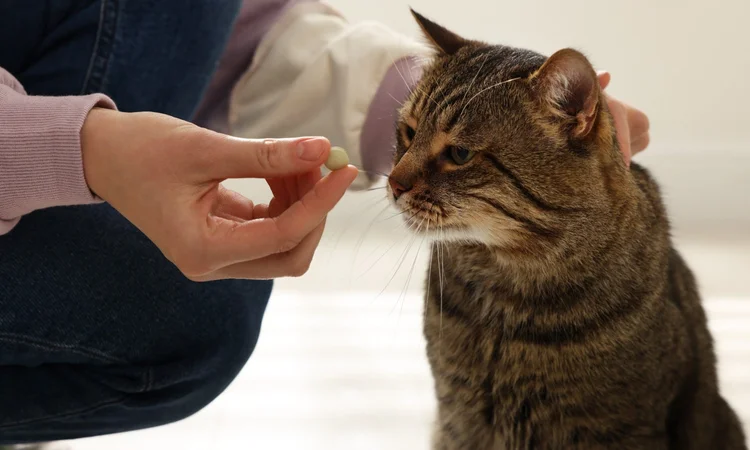
In these cases (and depending on the medicine you’re administering), you may be able to hide the tablet in some food or a treat to make sure they take it.
The best food to hide cat pills in will depend on your cat’s preferences. By offering them a treat or piece of cat-safe food with a pill sneakily hidden inside, you can make the morsel too irresistible for them to question. This could be a piece of meat, fish, yoghurt, or even a pill-giving treat like this EasyPill pill giver for cats, which disguises your cat’s tablets in a tasty putty.
Always ensure that your cat takes the entire required dosage and that the medicine can be given with food beforehand.
Can You Crush Cat Pills?
Whether or not you can crush your cat’s pills depends entirely on the medicine in question. Some cat tablets can be ground into powder and hidden in food or treats. However, other tablets lose their efficacy if they’re crushed or split, so they must be given whole.
It’s also important to note that not all tablets can be given with food and need to be administered on an empty stomach. In this case, hiding the tablet in food is out of the question, so we recommend using the method mentioned above to ensure your cat takes their full dosage.
Administering your cat’s medicine might feel like a chore, but ensuring it’s done properly is essential for your cat’s health. We hope this quick guide helps relieve the stress of giving your cat their medication.
Did you know you can also make getting your cat’s medication a stress-free experience? By buying your cat’s prescription medication online or just their routine health treatments, like flea and worming tablets, you can save time and money, making it easier to love your cat well.





Leave a Reply
Your email address will not be published.